


How Conex builds augmented customs: In-house AI, interoperability and human control

Page summary
The previous article established the concept. Augmented customs is no longer a theoretical idea: several software providers are now building the tools that make it possible, and not all are making the same choices. This article sets out the technical and methodological convictions that guide the Conex approach and why they matter for customs clearance professionals.
The choice of technological independence
Conex develops its key components in-house. EDI, blockchain, AI models: everything is designed, integrated and maintained by Conex teams. No dependence on a critical third-party component. No intermediation by an external integrator that dilutes business knowledge in the process.
This choice has a cost, and direct consequences for the client.
Firstly, control of the roadmap. When a regulatory change arrives—a new ICS2ICS2 (Import Control System 2) is the European Union's IT system for transmitting pre-customs clearance declarations for goods imported from third countries. ... format, a pre-clearance obligation, a change in a national nomenclature—the provider who builds their own components can adapt their tools without waiting for a third-party supplier to react. It is a matter of days.
Secondly, the depth of business knowledge. Conex is a pure-player customs specialist. Where most European players are supply chain generalists who have added a customs component to their catalogue, Conex concentrates its efforts on customs. This anchor point changes the nature of the tools in its range of customs clearance software solutions: their precision, their regulatory granularity, and their ability to manage atypical situations.
Finally, continuity. Project management, development, deployment, support: everything goes through Conex. Rather than a chain of intermediaries, the client has a single point of contact.
AI at the service of the declarant: Human control above all
AI augments the declarant; it does not replace them. From a software provider’s point of view, this phrase is not a slogan: it informs the design of our tools, not just our discourse.
In practical terms, this translates into 3 choices.
- The professional remains master of the rule; the agent is responsible for applying it. No critical arbitration is delegated to AI. Business rules, applicable tariff preferences, control thresholds, and conditions of origin are defined by the professional. The agent executes them within the framework set for it.
- Every AI suggestion is subject to human validation. No classification is applied silently. No data is extracted and injected without control. At every sensitive stage, the declarant validates, corrects, or rejects.
- No black box. Every proposal from the agent is accompanied by the reasoning that produced it: sources consulted, rule applied, confidence level. Traceability is an intrinsic element of the system’s very structure.
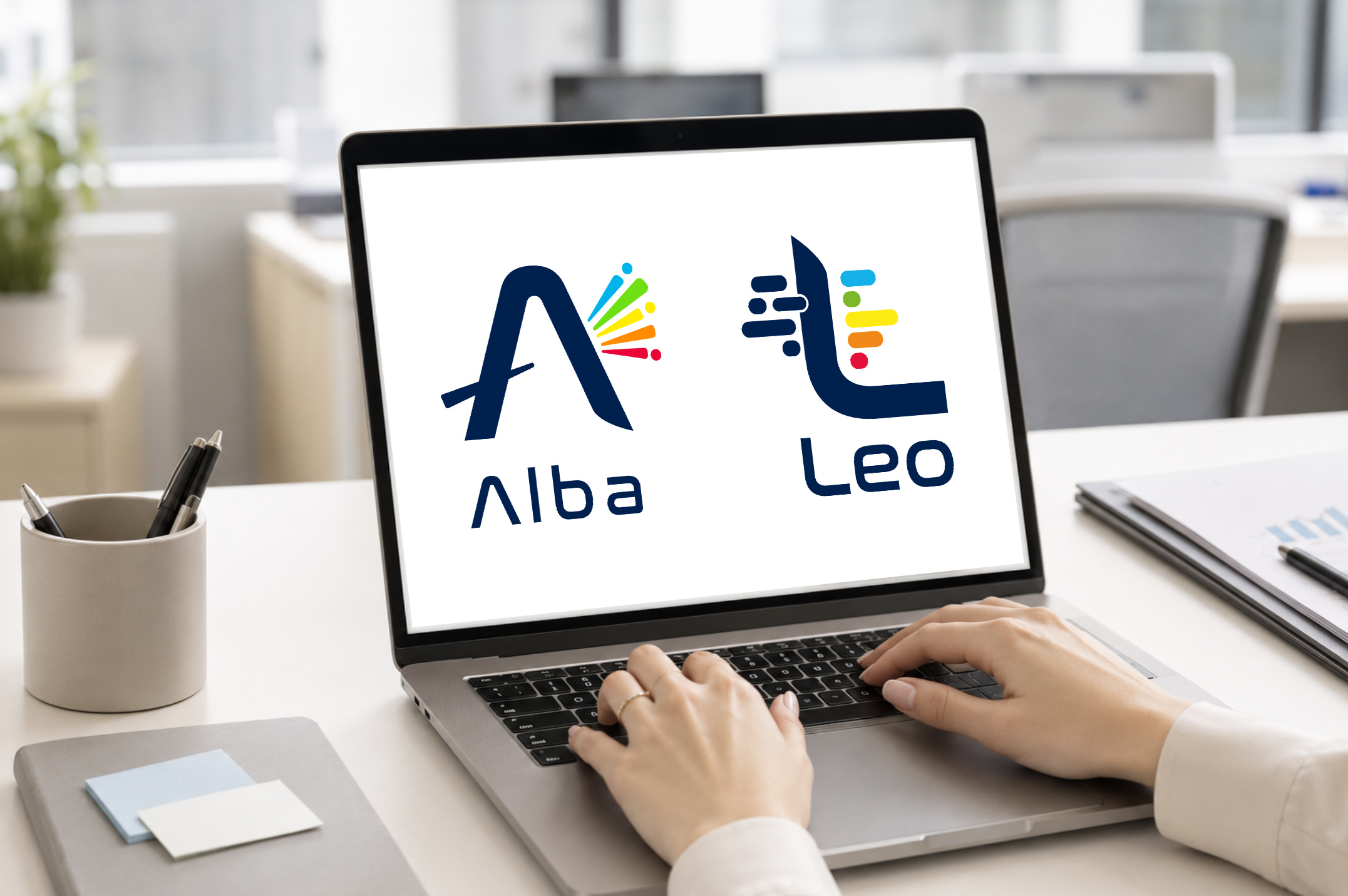
It is with this logic that Conex has chosen to personify its integrated AI agents, ALBA & LEO, to serve as a reminder that they are identifiable assistants with a clear scope and not anonymous algorithms.
Customs interoperability and CDMS agnosticism: Integrating without replacing everything
A customs department that wants to enter augmented customs should not have to overhaul its entire infrastructure. This is a conviction that guides the architecture of Conex tools.
First principle: CDMS agnosticism. Conex solutions plug into any existing ecosystem without imposing a replacement, whether the client is equipped with the Conex CDMS or another customs management system. No forced migration, no manual reconfiguration.
Second principle: Modularity. Each product works autonomously and can be linked with others according to needs. A customs department that wants to start with document extraction and keep its existing classification tool can do so. Those who wish to activate everything can also do so. The entry into augmented customs happens at the client’s pace.
40 years of regulation in the engine: The foundation of augmented customs
Customs AI is only effective if it is fed by deep regulatory expertise. Without this raw material, models classify nothing useful and extract nothing reliable. This is what distinguishes a generalist AI plugged into customs from an AI designed within customs.
Conex has been involved in customs software for 40 years. Its knowledge is not limited to one national market: the tools are deployed in France, Belgium, the United Kingdom, Ireland, Denmark, Spain, the Netherlands, Sweden and Norway. More than 2,000 customs departments are equipped in Europe.
What this depth changes for AI is concrete. A tariff classificationTariff classification involves assigning a code to a good in order to determine the applicable customs duties, taxes, and restrictions. ... is not just based on a product description, but on usage, case law, explanatory notes, and the specificities of application from one country to another. Document extraction is not just about character recognition, but about understanding the context: where to look for a statistical value on a document from freight forwarder X in country Y, how to interpret a handwritten note, and which inconsistencies to report as a priority. This intelligence is built through accumulation over years of real practice.
Choosing your augmented customs provider: The 4 Conex pillars
- Technological independence;
- AI designed to serve the professional;
- Interoperability with existing systems;
- Regulatory depth.
These 4 pillars structure the Conex approach to augmented customs. They answer a question that every customs department will eventually ask: whom to trust with the tools that will accompany the transformation of their profession?
AI agents for augmented customs
With our family of specialised AI agents, we offer you an augmented experience of customs management.
Invaluable assistance for tariff classification or declaration, reduced document processing time and lower risk of errors for customs declarants!
Customs content to discover

ALBA, the 1st integrated conversational classification agent
Conex, the French leader in customs clearance software solutions, gives birth to ALBA: its conversational agent specialised in customs tariff classification, natively integrated into declarants' workspaces.
Conex launches LEO, an integrated AI document processing agent
One month after the launch of ALBA, its conversational AI agent for tariff classification, Conex, the French leader in customs clearance software solutions, introduces LEO via conex™: an AI document processing assistant, natively integrated into the declarant's working environment.
![[PODCAST] AI & Customs: the interview with Bertrand Gruson, CEO of Conex](https://www.conex.net/fr/wp-content/uploads/2026/06/Podcast-interview-conex-1.jpg)
[PODCAST] AI & Customs: the interview with Bertrand Gruson, CEO of Conex
Speaking on TRANSPOD, Bertrand Gruson discusses innovation and AI in the service of customs.

Conex, the French SME digitalising global customs
Facing the increasing complexity of international trade, the French company Conex stands out as a key player in the digital transformation of customs formalities.
Discover our solutions
A comprehensive software suite to meet your customs management needs.
CUSTOMS via conex™
An intuitive software solution dedicated to managing all electronic customs clearance procedures for all customs regimes. A secure SaaS solution connected to national and European customs systems for the creation and transmission of import and export customs declarations.

ZEN via conex™
The international collaborative customs platform designed to streamline the collection, sharing, centralisation, tracking, and archiving of all information required throughout the customs process. Ideal for documenting your information flows from the pre-declaration through to electronic archiving.

TARIFF via conex™
The new generation Customs Encyclopedia, boosted by AI agents for tariff classification of goods: customs tariff, Harmonized System Explanatory Notes (HSEN), Combined Nomenclature, official publications and texts, customs regulatory watch.

SAFE via conex™
The ideal solution for managing pre-customs clearance formalities with complete peace of mind: ENS declarations and Logistics Envelopes, fully compliant with European and UK regulations.
EXPRESS via conex™
The solution dedicated to managing data for the European H7 declaration, required for distance sales and e-commerce of low-value goods imported from third countries.
ACCISES via conex™
The software for managing goods subject to excise duties for the electronic processing of accompanying documents (EAD) and the management of excise goods accounting.

FACTO via conex™
Customs service invoicing software allowing you to automatically invoice your customs services based on declaration data.

EUROPSTAT via conex™
The software that automates your intrastat/EMEBI and ESD declarations, ensuring declarative compliance for all your exchanges of goods and services within the European Union.